
TWR1 LED Wall Pack | Lithonia Lighting
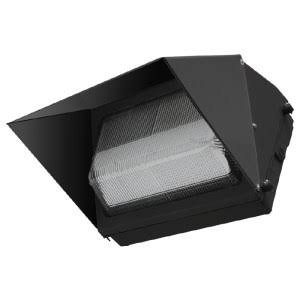
The Lithonia Lighting TWR1 delivers robust perimeter security illumination for commercial buildings, warehouses, and parking structures. We engineered this wall pack with a die-cast aluminum housing and impact-resistant polycarbonate lens to withstand harsh outdoor conditions while providing consistent LED light output across night hours.


We build every TWR1 wall pack around a one-piece die-cast aluminum body that eliminates the seam failures common in folded-sheet metal fixtures. The casting process creates integral mounting bosses and heat sink fins without mechanical fasteners, so there are no entry points for moisture infiltration. A multi-stage powder-coat finish bonds directly to the aluminum substrate and resists UV degradation, salt spray, and industrial chemical exposure.
Light Distribution & Application Zones
The TWR1 uses a precision-molded reflector system that directs LED output into a Type III forward-throw pattern. This distribution places the brightest zone 1.5 to 2.5 mounting heights in front of the fixture, ideal for perimeter walks, loading zones, and building facades where you need forward reach rather than wide lateral spread.
Selecting Output for Your Space
Small entries and side doors typically require 2,200-lumen units spaced 30-40 feet apart. Parking lot perimeters and service drives benefit from 3,500-lumen models at 40-50 foot spacing. Loading docks and high-traffic zones use 5,000-lumen packs to achieve 5-10 footcandles on the ground plane. The consistent performance across the outdoor security wall pack category means you can mix output levels on the same project without color-matching issues.
Photocell Control & Operating Economics
The integrated twist-lock photocell mounts in the fixture’s side port and activates the LED array when ambient light drops below 30 footcandles. This daylight-sensing threshold prevents nuisance cycling from passing clouds while ensuring the fixture illuminates during late-afternoon storms. The photocell’s fail-on design keeps lights operational if the sensor malfunctions, maintaining security coverage until service.
At typical utility rates, a 3,500-lumen TWR1 operating 12 hours nightly costs approximately $45-55 annually in electricity. The same light output from a 150-watt metal halide fixture would cost $140-170 per year, with additional expense for lamp and ballast replacements every 18-24 months.
Performance & construction highlights
More Commercial-Grade Outdoor Wall Packs



Customer reviews


TWR1 LED Wall Pack Questions
The TWR1 LED array is rated for 50,000 hours of operation, which translates to approximately 11.4 years of service when running 12 hours per night. This rating represents the point at which light output decreases to 70% of initial lumens (L70). The fixture continues operating beyond this point with gradually reduced output. Actual lifespan varies with ambient temperature and operating conditions, but coastal and industrial installations routinely exceed 10 years without LED replacement.
The integrated photocell uses a twist-lock mount accessible from the fixture’s side without removing the wall pack from its mounting plate. You simply rotate the photocell counterclockwise to remove it and twist the replacement clockwise until it locks. This service takes under two minutes from a ladder and doesn’t require shutting off power, though we recommend deactivating the circuit for safety during any maintenance work.
We recommend mounting the TWR1 between 12 and 20 feet above grade for optimal Type III performance. At 15-foot mounting height, the fixture delivers peak illumination 22-30 feet in front of the wall, with usable light extending 40-50 feet forward. Lower mounting (10-12 feet) concentrates light closer to the building and works well for pedestrian walkways. Higher mounting (20+ feet) extends reach but reduces vertical illumination on the facade itself.
The standard TWR1 operates at full output whenever the photocell activates and does not support dimming or occupancy control. For applications requiring motion-activated or bi-level operation, consider the TWR1 with optional 0-10V dimming driver, which allows integration with external occupancy sensors and lighting control systems. The dimming version maintains the same housing and optical performance while adding control compatibility.
The TWR1 is rated for ambient temperatures from -40°F to +131°F, covering both extreme cold and high-heat conditions. The die-cast aluminum housing acts as a passive heat sink that keeps LED junction temperatures within specification even in direct summer sun. In freezing conditions, the fixture reaches full output immediately without the warm-up period HID lamps require. We’ve documented reliable operation in both Alaskan winter installations and desert facilities in Arizona and Nevada.
Loading docks typically require 5 to 10 footcandles of maintained illumination for safe forklift operation and loading activities. The 5,000-lumen TWR1 delivers this level when mounted 15-18 feet high and spaced 35-45 feet apart along the dock wall. For lower-traffic docks or areas used primarily during daylight, the 3,500-lumen version at 30-35 foot spacing provides adequate security lighting. Consult IES recommended practice RP-20 for detailed commercial loading zone requirements specific to your facility type.
The standard TWR1 with Type III distribution directs less than 2% of total lumens above horizontal, meeting most municipal dark-sky requirements. For jurisdictions with zero-uplight mandates, the TWH series offers the same platform with an integral hood that achieves full cutoff. The hooded version maintains forward light distribution while eliminating all upward spill, though it requires slightly closer spacing to achieve the same footcandle levels as the unhooded TWR1.